• NCERT Solutions
    • NCERT Library
  • RD Sharma
    • RD Sharma Class 12 Solutions
    • RD Sharma Class 11 Solutions Free PDF Download
    • RD Sharma Class 10 Solutions
    • RD Sharma Class 9 Solutions
    • RD Sharma Class 8 Solutions
    • RD Sharma Class 7 Solutions
    • RD Sharma Class 6 Solutions
  • Class 12
    • Class 12 Science
      • NCERT Solutions for Class 12 Maths
      • NCERT Solutions for Class 12 Physics
      • NCERT Solutions for Class 12 Chemistry
      • NCERT Solutions for Class 12 Biology
      • NCERT Solutions for Class 12 Economics
      • NCERT Solutions for Class 12 Computer Science (Python)
      • NCERT Solutions for Class 12 Computer Science (C++)
      • NCERT Solutions for Class 12 English
      • NCERT Solutions for Class 12 Hindi
    • Class 12 Commerce
      • NCERT Solutions for Class 12 Maths
      • NCERT Solutions for Class 12 Business Studies
      • NCERT Solutions for Class 12 Accountancy
      • NCERT Solutions for Class 12 Micro Economics
      • NCERT Solutions for Class 12 Macro Economics
      • NCERT Solutions for Class 12 Entrepreneurship
    • Class 12 Humanities
      • NCERT Solutions for Class 12 History
      • NCERT Solutions for Class 12 Political Science
      • NCERT Solutions for Class 12 Economics
      • NCERT Solutions for Class 12 Sociology
      • NCERT Solutions for Class 12 Psychology
  • Class 11
    • Class 11 Science
      • NCERT Solutions for Class 11 Maths
      • NCERT Solutions for Class 11 Physics
      • NCERT Solutions for Class 11 Chemistry
      • NCERT Solutions for Class 11 Biology
      • NCERT Solutions for Class 11 Economics
      • NCERT Solutions for Class 11 Computer Science (Python)
      • NCERT Solutions for Class 11 English
      • NCERT Solutions for Class 11 Hindi
    • Class 11 Commerce
      • NCERT Solutions for Class 11 Maths
      • NCERT Solutions for Class 11 Business Studies
      • NCERT Solutions for Class 11 Accountancy
      • NCERT Solutions for Class 11 Economics
      • NCERT Solutions for Class 11 Entrepreneurship
    • Class 11 Humanities
      • NCERT Solutions for Class 11 Psychology
      • NCERT Solutions for Class 11 Political Science
      • NCERT Solutions for Class 11 Economics
      • NCERT Solutions for Class 11 Indian Economic Development
  • Class 10
    • NCERT Solutions for Class 10 Maths
    • NCERT Solutions for Class 10 Science
    • NCERT Solutions for Class 10 Social Science
    • NCERT Solutions for Class 10 English
    • NCERT Solutions For Class 10 Hindi Sanchayan
    • NCERT Solutions For Class 10 Hindi Sparsh
    • NCERT Solutions For Class 10 Hindi Kshitiz
    • NCERT Solutions For Class 10 Hindi Kritika
    • NCERT Solutions for Class 10 Sanskrit
    • NCERT Solutions for Class 10 Foundation of Information Technology
  • Class 9
    • NCERT Solutions for Class 9 Maths
    • NCERT Solutions for Class 9 Science
    • NCERT Solutions for Class 9 Social Science
    • NCERT Solutions for Class 9 English
    • NCERT Solutions for Class 9 Hindi
    • NCERT Solutions for Class 9 Sanskrit
    • NCERT Solutions for Class 9 Foundation of IT
  • CBSE Sample Papers
    • Previous Year Question Papers
    • CBSE Topper Answer Sheet
    • CBSE Sample Papers for Class 12
    • CBSE Sample Papers for Class 11
    • CBSE Sample Papers for Class 10
    • CBSE Sample Papers for Class 9
    • CBSE Sample Papers Class 8
    • CBSE Sample Papers Class 7
    • CBSE Sample Papers Class 6
  • Textbook Solutions
    • Lakhmir Singh
    • Lakhmir Singh Class 10 Physics
    • Lakhmir Singh Class 10 Chemistry
    • Lakhmir Singh Class 10 Biology
    • Lakhmir Singh Class 9 Physics
    • Lakhmir Singh Class 9 Chemistry
    • PS Verma and VK Agarwal Biology Class 9 Solutions
    • Lakhmir Singh Science Class 8 Solutions

Learn CBSE

NCERT Solutions for Class 6, 7, 8, 9, 10, 11 and 12

Exploration Class 9 Science Solutions 2026-2027

July 16, 2026 by Veerendra

Class 9 NCERT Science Book Exploration Solutions: are given for the students so that they can get to know the in text question and chapter end question answers in case they are not able to find it. It is important for all the students who are in Class 9th currently. Here we are providing the solutions to all the chapters of Exploration Class 9 Science Textbook for the students. They can refer to Class 9 Science Exploration Solutions Physics, Chemistry and Biology while they are solving the questions from the Science Book.

Class 9 Science Exploration Solutions: NCERT Solutions for Class 9 Science Exploration

NCERT Solutions for Class 9 Science Exploration is given here. Students can click on the links of the particular chapter for which they are finding the solutions.

Class 9 NCERT Science Book Exploration Solutions

NCERT Solutions for Class 9 Science Exploration Question Answer

  • Chapter 1 Exploration Entering the World of Secondary Science Class 9 Question Answer
  • Chapter 2 Cell The Building Block of Life Class 9 Question Answer
  • Chapter 3 Tissues in Action Class 9 Question Answer
  • Chapter 4 Describing Motion Around Us Class 9 Question Answer
  • Chapter 5 Exploring Mixtures and Their Separation Class 9 Question Answer
  • Chapter 6 How Forces Affect Motion Class 9 Question Answer
  • Chapter 7 Work Energy and Simple Machines Class 9 Question Answer
  • Chapter 8 Journey Inside the Atom Class 9 Question Answer
  • Chapter 9 Atomic Foundations of Matter Class 9 Question Answer
  • Chapter 10 Sound Waves Characteristics and Applications Class 9 Question Answer
  • Chapter 11 Reproduction How Life Continues Class 9 Question Answer
  • Chapter 12 Patterns in Life Diversity and Classification Class 9 Question Answer
  • Chapter 13 Earth as a System Energy Matter and Life Class 9 Question Answer

NCERT Class 9 Advanced Science Book Solutions

  • Chapter 1 Measurement Foundation of Science Class 9 Question Answer
  • Chapter 2 Understanding Motion through Experience Class 9 Question Answer
  • Chapter 3 Newton’s Laws of Motion Class 9 Question Answer
  • Chapter 4 The Geometry of Power Advanced Simple Machines Class 9 Question Answer
  • Chapter 5 Work and Energy Class 9 Question Answer
  • Chapter 6 Structure of Atom Class 9 Question Answer
  • Chapter 7 Chemical Bonding Class 9 Question Answer
  • Chapter 8 Mixtures and their Separation Class 9 Question Answer
  • Chapter 9 Microscope and Microscopy Class 9 Question Answer
  • Chapter 10 Engineering Life: Miracles in Biotechnology Class 9 Question Answer

Also Read

  • Class 9 Science Extra Questions (Exploration)
  • Class 9 Science Important Questions (Exploration)
  • Class 9 Advanced Science Solutions
  • Class 9 Science MCQ (Exploration)
  • Class 9 Science Notes (Exploration)
  • Class 9 Science Exploration Worksheet
  • Exploration Class 9 Science Book Solutions
  • NCERT Solutions for Class 9
  • NCERT Books for Class 9

Old Syllabus

  • Chapter 14 Natural Resources
  • Chapter 15 Improvement in Food Resources

The students who are in class 9th and have the NCERT Science Books can check this page to know the answers for all the chapters of Science book. They need to ensure that they are checking the solutions for the chapter which they intend to check.

Importance of the Class 9 Exploration Physics, Chemistry, Biology NCERT Solutions

Important Questions for Class 9 Science

The NCERT Class 9 Science Textbook Solutions are important for the students to get good marks in their exams. Through these, they can get solutions to those questions on which they get stuck. These are the valid solutions and students can check these whenever they face any confusion in the questions.
Class 9 Science Exploration Chapter 1 Exploration: Entering the World of Secondary Science

This chapter explains how science works and how scientific knowledge is developed. It shows that science is not just a collection of facts, but a process of observation, reasoning, and testing ideas to understand the natural world. It describes how scientists study and understand complex situations by using models that focus on important factors and ignore less relevant details.

The chapter also highlights the importance of clear communication using scientific language, symbols, and standard units. It explains how mathematics helps in expressing relationships between quantities, and how predictions are made using evidence and revised when needed. You will also learn how estimation helps in checking whether answers are reasonable.

Class 9 Science Exploration Chapter 2 Cell: The Building Block of Life

This chapter explains that cells are the basic units of life and form all living organisms, from single-celled bacteria to complex multicellular organisms such as humans. It describes the discovery of cells, the structure and firnctions of cells, different cell organelles, and the differences between prokaryotic and eukaryotic cells.

The chapter also explains important processes such as osmosis, diffusion, mitosis, and meiosis, and highlights the role of cells in growth, repair, reproduction, and the maintenance of life. It further discusses cell theory, cell division, and how controlled cellular activities help living organism5 survive and function in an organised manner.

Class 9 Science Exploration Chapter 3 Tissues in Action

This chapter explores the organisation of cells into tissues and how they work together to perform various functions in living organisms. It explains the different types of plant and animal tissues, their structure, and their specific roles. The chapter highlights how plant tissues support growth, transport substances, and assist in food production, while animal tissues enable movement, protection, coordination, and the transport of substances. It also describes the levels of organisation in living organisms, from cells to tissues, organs, and organ systems.

Additionally, the chapter emphasises the importance of tissues in maintaining body functions, growth, repair, and the overall survival of plants and animals. It further introduces joints, explaining how they connect bones and allow different types of movement, helping the body perform various physical activities.

Class 9 Science Exploration Chapter 4 Describing Motion Around Us

This chapter explains the concept of motion and how objects move. It discusses how to describe an object’s position, measuring distance and displacement, and understand different types of motion, like straight line and motion in a plane.

The chapter also introduces the fundamental quantities of speed, velocity, and acceleration. Graphical methods, such as position-time graphs and velocity-time graphs, are explained in this chapter to help analyse and understand motion clearly and effectively. The chapter further explains the equations of motion for objects moving with constant acceleration. It also includes uniform circular motion, in which an object moves in a circular path at constant speed.

Class 9 Science Exploration Chapter 5 Exploring Mixtures and Their Separation Class

The chapter explains how mixtures can be classified and separated based on their physical properties. It introduces homogeneous and heterogeneous mixtures, along with the concepts of solutions, concentration, solubility, and solubility curves. Students will learn different techniques for separating mixtures, such as crystallisation, distillation, and paper chromatography.

The chapter also covers the separation of immiscible liquids, as well as processes like sublimation and deposition. Further, it helps students compare solutions, suspensions, and colloids, and understand the Tyndall effect, centrifugation, and coagulation through everyday examples and activities. Finally, the concept of alloys shows how mixtures of metals are widely
used in daily life and various industries.

Class 9 Science Exploration Chapter 6 How Forces Affect Motion

This chapter explains how force affects the motion of objects ¡n everyday life and in different situations. It shows that a force can make a stationary object move, stop a moving object, or change its speed and direction. Forces may act through contact, such as pushing and pulling, or without contact, such as magnetic and gravitational forces. It also introduces balanced and unbalanced forces. Balanced forces do not change the state of motion of an object, while unbalanced forces can cause an object to move or change its motion.

The chapter explains the relationship between force, mass, and acceleration. A key focus is on Newton’s Laws of Motion. The first law describes resistance to change ¡n motion, the second law relates force to mass and acceleration, and the third law explains action—reaction force pairs.

Class 9 Science Exploration Chapter 7 Work, Energy, and Simple Machines

This chapter explores how forces are described through the concepts of work, energy and power. Work is done when a force causes displacement, and the displacement is along the direction of the applied force. The work-energy theorem states that the net work done on an object equals the change in its kinetic energy. Mechanical energy, the sum of kinetic energy (due to motion) and potential energy (due to position or deformation), is conserved in the absence of non-conservative external forces. Power is the rate of doing work. Simple machines (such as pulleys, inclined planes and levers) make work easier
by changing the force required without reducing the total work done.

Class 9 Science Exploration Chapter 8 Journey Inside the Atom

This chapter takes you on an interesting journey into the world of atoms. Although atoms were once believed to be indivisible, scientists later discovered that they are made up of smaller subatomic particles such as electrons, protons, and neutrons. You will learn about the historical development of atomic models, from Dalton’s solid sphere model to Thomson’s plum pudding model, Rutherford’s nuclear model, and Bohr’s model of energy levels.

The chapter also explains the structure of the atom, the distribution of electrons in different energy levels, and important concepts such as atomic number, mass number, valency, isotopes, and isobars. It further highlights how scientific curiosity, observations, and experiments helped shape our modern understanding of atomic structure.

Class 9 Science Exploration Chapter 9 Atomic Foundations of Matter

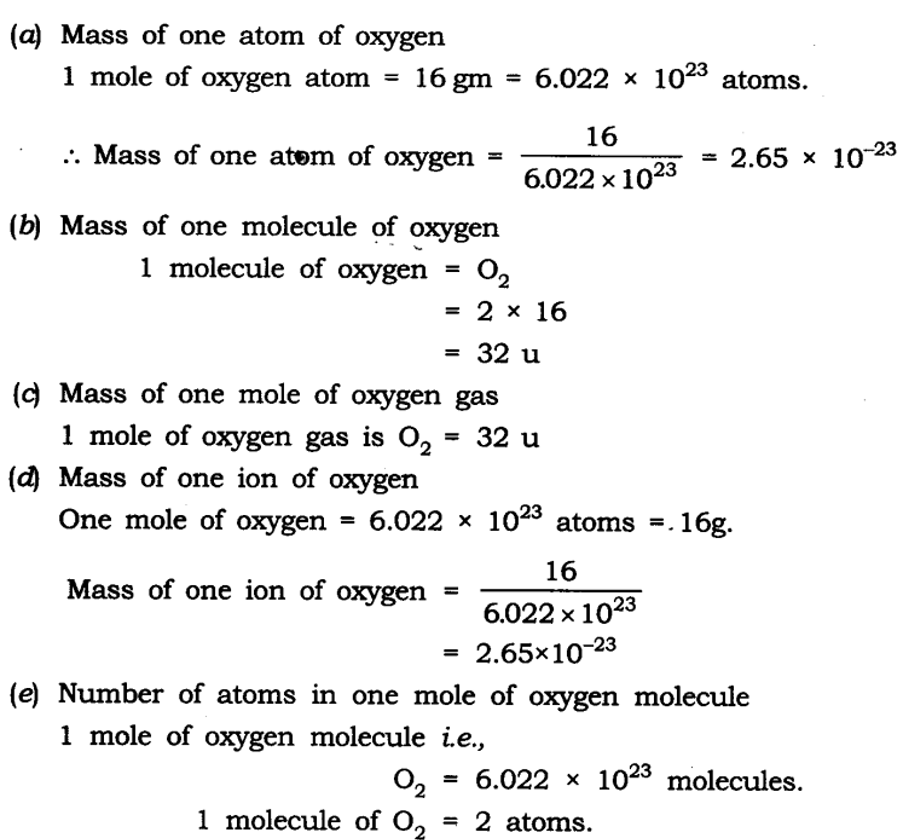
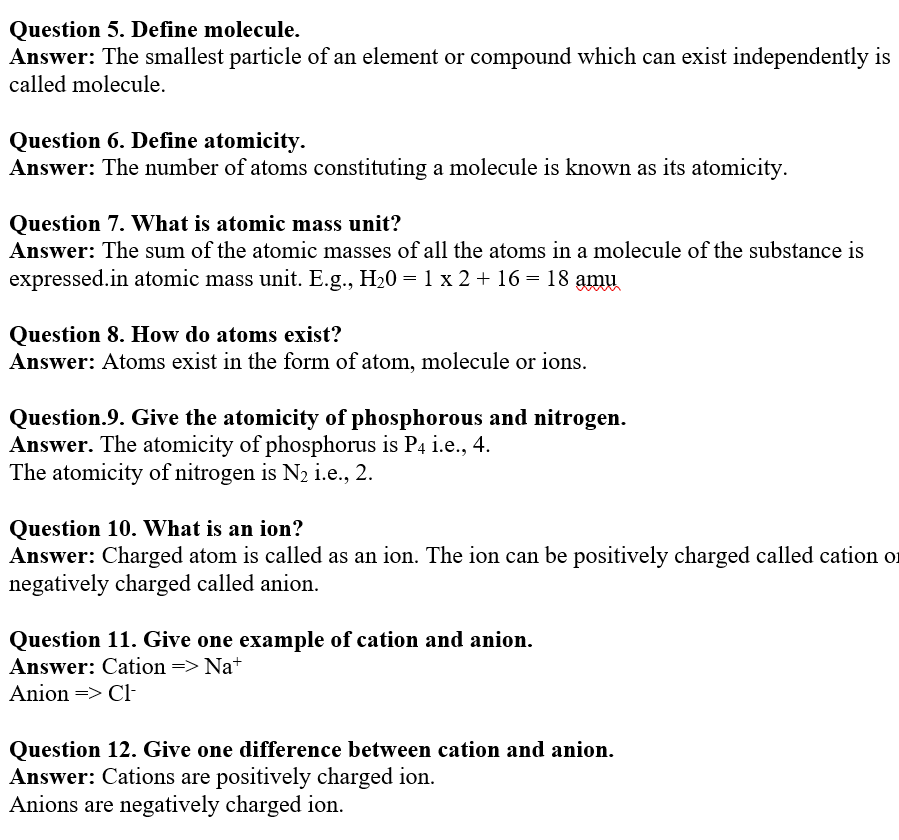
Everything around us is made of matter, but how do these substances form and behave? In this chapter, you will learn about the conservation of mass in physical and chemical changes through simple activities. You will also explore the Law of Conservation of Mass and the Law of Constant Proportions, which explain how substances react and combine. You will study Dalton’s Atomic Theory and understand how atoms combine to form molecules and compounds.

The chapter further introduces chemical bonding, including ionic and covalent bonding, and explains how to write chemical formulae. You will also compare the properties of ionic and covalent compounds and learn how to calculate molecular mass and formula unit mass. Together, these ideas help explain the structure and behaviour of matter at the atomic level.

Class 9 Science Exploration Chapter 10 Sound Waves: Characteristics and Applications

Sound is a form of energy that helps us communicate and understand our surroundings. It is produced by vibrations of objects and travels through media such as air, water, and solids.

In this chapter, we learn how sound is produced and study important properties of sound such as wavelength, frequency, amplitude, and the speed of sound. This chapter also includes concepts like echo, reflection of sound, and applications such as sonar and echolocation.

Class 9 Science Exploration Chapter 11 Reproduction: How Life Continues

This chapter explains how reproduction occurs in plants, animals, and humans, including processes such as pollination, fertilisation, and the development of a new organism. It also highlights the importance of variation, which helps species survive and evolve.

In addition, the chapter emphasises reproductive health, focusing on the maintenance of physical, mental, and social well-being, raising awareness of safe practices, and preventing diseases of the reproductive system.

Class 9 Science Exploration Chapter 12 Patterns in Life: Diversity and Classification

In this chapter, we study the vast diversity of life on Earth and how living organisms are grouped in a systematic way. We learn about biodiversity, which refers to the variety of life forms found in different habitats, from microscopic organisms to large animals and plants.

The chapter explains how organisms interact with each other and their environment and why this diversity is mportant for maintaining ecological balance. It also introduces the need for classification, which helps scientists organise millions of organisms into groups based on similarities and differences. We further learn about different classification systems, from early simple systems to the modern five-kingdom classification system. The chapter also explains major groups of plants and animals, binomial nomenclature, fossils as evidence of evolution, and the importance of conserving biodiversity.

Class 9 Science Exploration Chapter 13 Earth as a System: Energy, Matter and Life

This chapter explains how the Earth works as a complex and interconnected system where energy and matter continuously interact among the geosphere, hydrosphere, cryosphere, atmosphere and biosphere. It describes that the solar energy is the primary source of energy that drives major natural processes such as winds, ocean currents, weather, and biogeochemical cycles like the water, carbon, nitrogen, and oxygen cycles.

This help maintain life and environmental balance on Earth. It further discusses how human activities such as deforestation, burning of fossil fuels, and excessive use of fertilisers disturb these natural systems, leading to global warming, climate change, pollution, and loss of biodiversity. The chapter highlights the importance of conservation, renewable energy, sustainable farming, and global environmental efforts for building a sustainable future.

FAQs on Exploration Class 9 Science Solutions

1. What’s the best way to study Class 9 Science Exploration CBSE?

The best way to study Class 9 Science is through NCERT. Don’t just mug up the concepts instead go through all the concepts thoroughly. Make notes and practice as much as you can.

2. Where can I get the NCERT solutions for Class 9 Science?

You need not panic as we will give you all the NCERT Solutions for Class 9 Science all at one place on our site. View or download them and practice as and when you want.

3. Which is the best book of Exploration science for Class 9 CBSE?

We will not specifically say one book is the best for preparing Class 9 Science. Instead, we will ay try covering all the concepts in NCERT Textbooks prescribed for Class 9 Science that can help in your Exams.

4. How do I score good marks in science class 9?

The only key for scoring more marks in the CBSE Class 9 Science Exploration Exam is through sheer practice. It’s the best way to score well in the exams as well as get command on the subject.

5. Where can I get CBSE Class 9 Sample Papers?

Aspirants can get the CBSE Class 9 Sample Papers that can ace up preparation for free of cost from our page. Check out the links available on our site and use them as a reference to score better grades in the exam.

6. What are the study tips for Class 9 Science Exam?

Some of the best tips that help you to score more in your Class 9 Science Exam are as follows

  • Make a proper plan and schedule to study
  • Focus on the basic concepts and try concentrating on weaker areas.
  • Dedicate time to each of the concepts.
  • Practice as much as you can to score well.

Filed Under: Class 9

LearnCBSE.in Student Education Loan
  • Student Nutrition - How Does This Effect Studies
  • Words by Length
  • NEET MCQ
  • Factoring Calculator
  • Rational Numbers
  • CGPA Calculator
  • TOP Universities in India
  • TOP Engineering Colleges in India
  • TOP Pharmacy Colleges in India
  • Coding for Kids
  • Math Riddles for Kids with Answers
  • General Knowledge for Kids
  • General Knowledge
  • Scholarships for Students
  • NSP - National Scholarip Portal
  • Class 12 Maths NCERT Solutions
  • Class 11 Maths NCERT Solutions
  • NCERT Solutions for Class 10 Maths
  • NCERT Solutions for Class 9 Maths
  • NCERT Solutions for Class 8 Maths
  • NCERT Solutions for Class 7 Maths
  • NCERT Solutions for Class 6 Maths
  • NCERT Solutions for Class 6 Science
  • NCERT Solutions for Class 7 Science
  • NCERT Solutions for Class 8 Science
  • NCERT Solutions for Class 9 Science
  • NCERT Solutions for Class 10 Science
  • NCERT Solutions for Class 11 Physics
  • NCERT Solutions for Class 11 Chemistry
  • NCERT Solutions for Class 12 Physics
  • NCERT Solutions for Class 12 Chemistry
  • NCERT Solutions for Class 10 Science Chapter 1
  • NCERT Solutions for Class 10 Science Chapter 2
  • Metals and Nonmetals Class 10
  • carbon and its compounds class 10
  • Periodic Classification of Elements Class 10
  • Life Process Class 10
  • NCERT Solutions for Class 10 Science Chapter 7
  • NCERT Solutions for Class 10 Science Chapter 8
  • NCERT Solutions for Class 10 Science Chapter 9
  • NCERT Solutions for Class 10 Science Chapter 10
  • NCERT Solutions for Class 10 Science Chapter 11
  • NCERT Solutions for Class 10 Science Chapter 12
  • NCERT Solutions for Class 10 Science Chapter 13
  • NCERT Solutions for Class 10 Science Chapter 14
  • NCERT Solutions for Class 10 Science Chapter 15
  • NCERT Solutions for Class 10 Science Chapter 16

Free Resources

RD Sharma Class 12 Solutions RD Sharma Class 11
RD Sharma Class 10 RD Sharma Class 9
RD Sharma Class 8 RD Sharma Class 7
CBSE Previous Year Question Papers Class 12 CBSE Previous Year Question Papers Class 10
NCERT Books Maths Formulas
CBSE Sample Papers Vedic Maths
NCERT Library

NCERT Solutions

NCERT Solutions for Class 10
NCERT Solutions for Class 9
NCERT Solutions for Class 8
NCERT Solutions for Class 7
NCERT Solutions for Class 6
NCERT Solutions for Class 5
NCERT Solutions for Class 4
NCERT Solutions for Class 3
NCERT Solutions for Class 2
NCERT Solutions for Class 1

Quick Resources

English Grammar Hindi Grammar
Textbook Solutions Maths NCERT Solutions
Science NCERT Solutions Social Science NCERT Solutions
English Solutions Hindi NCERT Solutions
NCERT Exemplar Problems Engineering Entrance Exams
Like us on Facebook Follow us on Twitter
Watch Youtube Videos NCERT Solutions App