Our subject specific Class 8 Social Science Worksheet and Class 8 SST Chapter 7 Factors of Production Worksheet with Answers Pdf are aligned with latest patterns.
Factors of Production Worksheet Class 8
Class 8 Factors of Production Worksheet
Worksheet On Factors of Production Class 8 – Factors of Production Worksheet
Multiple Choice Questions
Question 1.
Which of the following is not an example of a factor of production?
(a) Land
(b) Labour
(c) Capital
(d) Consumption
Answer:
(d) Consumption
Question 2.
Which additional element enables businesses to produce more using fewer resources?
(a) Government support
(b) Technology
(c) Marketing
(d) Transportation
Answer:
(b) Technology
Question 3.
Identify the types of resources that include air, water, and sunlight.
(a) Human resources
(b) Economic goods
(c) Land resources
(d) Technology products
Answer:
(c) Land resources
Question 4.
Which of the following is not an element of human capital?
(a) Expertise
(b) Knowledge
(c) Specialised skills
(d) Physical fatigue
Answer:
(d) Physical fatigue
Question 5.
A police officer maintaining law and order performs which type of activity?
(a) Physical labour only
(b) Mental labour only
(c) Application of knowledge and skills
(d) Government orders
Answer:
(c) Application of knowledge and skills
Question 6.
Which of the following is included under the factor of production ‘Labour’?
(a) Tools and machines
(b) Human effort and skills
(c) Minerals and forests
(d) Money invested in business
Answer:
(b) Human effort and skills

Question 7.
Human beings as a resource contribute to production through
(a) Decision-making
(b) Knowledge and skills
(c) Physical and mental effort
(d) All of these
Answer:
(d) All of these
Question 8.
Which of the following statements about ‘Human Capital’, are correet?
I. It refers only to the number of people engaged in production.
II. Education and healthcare are essential components for developing human capital.
Options
(a) Only I
(b) Only II
(c) Both I and II
(d) Neither I nor II
Answer:
(b) Only II
Question 9.
The decline of traditional techniques such as ship stitching in India occurred mainly due to
(a) Arrival of Europeans
(b) Natural disasters
(c) Lack of raw materials
(d) None of these
Answer:
(a) Arrival of Europeans
Question 10.
These cultural values helped Germany become a global leader in which field?
(a) Entertainment and sports
(b) Agriculture and mining
(c) Technology and manufacturing
(d) Tourism and hospitality
Answer:
(c) Technology and manufacturing
Question 11.
Identify the correct statement(s) about technology in production.
I. It improves production by replacing outdated methods.
II. It reduces the dependency on other factors like labour.
Options
(a) Only I
(b) Only II
(c) Both I and II
(d) Neither I nor II
Answer:
(c) Both I and II
Question 12.
Which of the following statements is correct about entrepreneurs?
I. They take risks and invest money.
II. They combine various factors of production.
III. They only focus on making profits.
Options
(a) I and II only
(b) II and III only
(c) I and III only
(d) All of these
Answer:
(a) I and II only
Question 13.
Access to Which facilities helps individuals benefit from demographic potential?
(a) Quality education
(b) Healthcare
(c) Vocational training and skill development
(d) All of the above
Answer:
(d) All of the above
Question 14.
India holds which position in the world for mobile phone manufacturing after China?
(a) Second
(b) Third
(c) Fourth
(d) First
Answer:
(a) Second
Question 15.
Which of the following statements about land as a factor of production are correct?
I. Land refers only to empty fields and plots.
II. Air, water, sunlight, and minerals are included in the economic meaning of land.
III. Land is a man-made resource.
IV. Producers do not need to pay for land use.
V. Land is a limited natural resource.
Options
(a) I, II, and III
(b) II and IV
(c) II and V
(d) All of these
Answer:
(c) II and V
Assertion-Reason Questions And Answers
Given below are two statements marked as Assertion (A) and Reason(R). Read the statements and answer the questions according to the codes given below.
Codes
(a) Both A and R are true and R is the correct explanation of A.
(b) Both A and R are true, but R is not the correct explanation of A.
(c) A is true, but R is false.
(d) A is false, but R is true.
Question 1.
Assertion (A) Entrepreneurs play a key role in combining different factors of production.
Reason (R) They only provide capital for production.
Answer:
(c) A is true, but R is false.
Question 2.
Assertion (A) Training helps enhance the productivity of human capital.
Reason (R) It enables individuals to apply scientific techniques in agriculture only.
Answer:
(c) A is true, but R is false.
Question 3.
Assertion (A) Technological advancement can reduce dependency on labour in some sectors.
Reason (R) Use of machines can make production faster and more efficient.
Answer:
(a) Both A and R are true and R is the correct explanation of A.
Question 4.
Assertion (A) Land is a renewable factor of production.
Reason (R) Minerals and oil can be replenished quickly.
Answer:
(d) A is false, but R is true.
Question 5.
Assertion (A) The supply chain plays a major role in smooth production.
Reason (R) It involves only the transportation of finished goods to consumers.
Answer:
(c) A is true, but R is false.
Fill in the Blanks
Fill in the blanks with the help of words in the box given below.
| Police officer, Demographic, Technology, Capital, Inputs, Technology, Healthy, Kaizen, Corporate, Natural, Entrepreneurship, Germany, Adult |
1. The four main factors of production are Land, Labour, Capital, and ___________.
Answer:
Inputs
2. Ratna had to arrange location, money, staff, and ingredients, which are all examples of ___________
Answer:
Entrepreneurship
3. ___________ is the process of applying scientific knowledge to improve production and solve problems.
Answer:
Technology
4. A ___________ maintains law and order, while a scientist invents new technologies.
Answer:
Police officer
5. The stock market is a special type of market where ___________ and bought and sold.
Answer:
Shares
6. The word ‘land’ in economics includes not only soil but also other ___________ resources like water, forests, and minerals.
Answer:
Natural
7. The work ethic of ___________ is known for punctuality, quality, and attention to detail.
Answer:
Germany
8. The percentage of people aged 15 and above who can read and write is called the ___________; literacy rate.
Answer:
Adult
9. A country benefits from having a large young working population; this is known as the ___________ dividend.
Answer:
Demographic
10. ___________ and healthcare are essential components of developing human capital.
Answer:
Education
11. India was the first country to introduce a law on ___________ Social Responsibility in 2014.
Answer:
Corporate
12. The Japanese concept called ___________ means ‘continuous improvement’.
Answer:
Kaizen
13. ___________ refers to money plus human-made resources used to produce goods and services.
Answer:
Capital
True or False
Write T for True or ‘F’ for False statements.
1. A healthy and educated population can significantly enhance a country’s productivity.
Answer:
True
2. Entrepreneurs are not required once a business is set up and running.
Answer:
False
3. Human capital refers only to the basic physical efforts of labour.
Answer:
False
4. Education and training are important facilitators of human capital.
Answer:
True
5. Businesses can either purchase land or pay rent to use it.
Answer:
True
6. Male and female literacy rates are equal in India, according to the World Bank 2023.
Answer:
True
7. India’s adult literacy rate for females is higher than for males.
Answer:
False
8. Ancient Indian knowledge systems like the Shilpashastras gave detailed guidelines on art and craftsmanship.
Answer:
True
9. India has made notable progress in education and human development since independence.
Answer:
True
10. The traditional ship-stitching technique in India became more popular after Europeans arrived.
Answer:
False
11. A poor supply chain can affect the timely delivery of goods.
Answer:
True
12. Environmental concerns are part of Corporate Social Responsibility (CSR).
Answer:
True
Match the Columns
Question 1.
Match the concepts in Column A with their correct description/Examples in Column B.
| Column A (Concepts) | Column B (Descriptions/Examples) |
| A. Entrepreneur | 1. Process that increases knowledge, skill and job performance |
| B. Dividend | 2. Traditional value emphasising continuous improvement (Kaizen) |
| C. Training | 3. Person who takes risks and drives innovation in business |
| D. Productivity | 4. Profit shared with shareholders of a company |
| E. Cultural Influence on Work | 5. Ability to produce more in a given time |
Answer:
| Column A (Concepts) | Column B (Descriptions/Examples) |
| A. Entrepreneur | 3. Person who takes risks and drives innovation in business |
| B. Dividend | 4. Profit shared with shareholders of a company |
| C. Training | 1. Process that increases knowledge, skill and job performance |
| D. Productivity | 5. Ability to produce more in a given time |
| E. Cultural Influence on Work | 2. Traditional value emphasising continuous improvement (Kaizen) |
Question 2.
Match the concepts in Column A with their correct description in Column B.
| Column A | Column B |
| A. Grocery shops | 1. Packaged goods, storage space |
| B. Restaurants | 2. Raw ingredients, gas, utensils |
| C. Mobile repair shops | 3. Tools, spare parts, skills |
| D. Salons | 4. Scissors, creams, water, electricity |
Answer:
| Column A | Column B |
| A. Grocery shops | 1. Packaged goods, storage space |
| B. Restaurants | 2. Raw ingredients, gas, utensils |
| C. Mobile repair shops | 3. Tools, spare parts, skills |
| D. Salons | 4. Scissors, creams, water, electricity |
Question 3.
Match the concepts in Column A with their correct description in Column B.
| Column A | Column B |
| A. Personal savings | 1. Borrowed funds with interest |
| B. Bank loan | 2. Own money used in business |
| C. Stock market | 3. Initial financial support |
| D. Friends & family | 4. Raising money by selling shares |
Answer:
| Column A | Column B |
| A. Personal savings | 2. Own money used in business |
| B. Bank loan | 1. Borrowed funds with interest |
| C. Stock market | 4. Raising money by selling shares |
| D. Friends & family | 3. Initial financial support |
Question 4.
Match the concepts in Column A with their correct description in Column B.
| Column A | Column B |
| A. UPI payments | 1. Assist in surgeries |
| B. GPS | 2. Shortest route discovery |
| C. Drones | 3. Crop spraying |
| D. Robots | 4. Online money transfer |
Answer:
| Column A | Column B |
| A. UPI payments | 4. Online money transfer |
| B. GPS | 2. Shortest route discovery |
| C. Drones | 3. Crop spraying |
| D. Robots | 1. Assist in surgeries |
Jumbled Words
Rearrange the words to form a correct word with the help of the pictures given below.

1. ACEIHYNMR ___________
Answer:
MACHINERY
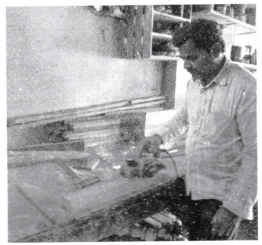
2. NARRETCEP ___________
Answer:
CARPENTER
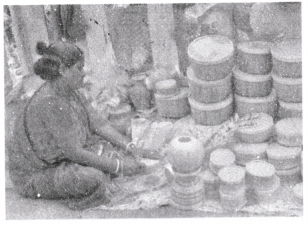
Unjumble the words to make the correct word
3. SIPRREENNEUTH ___________
Answer:
ENTREPRENEURSHIP
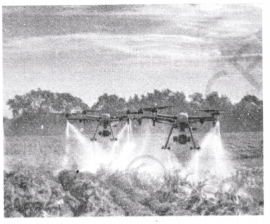
4. YLOOGNHTECO ___________
Answer:
TECHNOLOGY
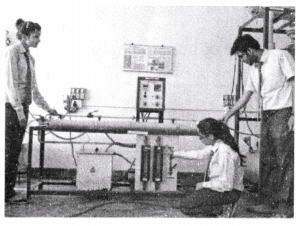
5. NGERTIAN ___________
Answer:
TRAINING
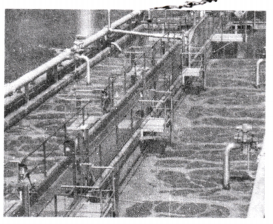
6. CYNIRGLEC ___________
Answer:
RECYCLING
Very Short Answer Type Questions
Question 1.
Name the factor of production that involves natural resources like water, air and sunlight.
______________________________________________
______________________________________________
Question 2.
List two sources from which small businesses raise capital.
______________________________________________
______________________________________________
Question 3.
Identify one way in which training improves labour productivity.
______________________________________________
______________________________________________
Question 4.
What is meant by ‘skill development’?
______________________________________________
______________________________________________
Question 5.
Define the term “demographic dividend.”
______________________________________________
______________________________________________
Question 6.
Mention one example of how environmental resources can be misused in production.
______________________________________________
______________________________________________
Short Answer Type Questions
Question 1.
How do social and cultural factors influence the quality of human capital?
______________________________________________
______________________________________________
Question 2.
Why is the responsible use of natural resources important in production?
______________________________________________
______________________________________________
Question 3.
Explain why the supply chain is essential in the production process.
______________________________________________
______________________________________________
Question 4.
Compare labour-intensive and capital-intensive sectors with one example each.
______________________________________________
______________________________________________
Question 5.
Suggest two ways in which a school can contribute to building future human capital.
______________________________________________
______________________________________________
Long Answer Type Questions
Question 1.
Describe how technology has transformed production and skill-building, with examples such as drones in agriculture, UPI, GPS, and online learning platforms.
______________________________________________
______________________________________________
Question 2.
The supply chain ensures that all production inputs reach the factory-errtfine. Explain how disruptions in the supply chain, like during COVID-19, can halt’production. Include an example of any sector.
______________________________________________
______________________________________________
Question 3.
Justify the need for Corporate Social Responsibility (CSR) in balancing business growth with social and environmental responsibilities. Include examples such as fair wages, training and pollution control.
______________________________________________
______________________________________________
Source Based Questions
Read the source given below and answer the questions that follow.
Question 1.
Indians used a unique stitching technique dating back over 2000 years to make ships and boats, which they used to conduct maritime trade and cultural exchanges across the Indian Ocean. The technique involved stitching wooden planks together using cords instead of nails, which made them flexible and helped the ships navigate the Indian Ocean with ease.
(i) How did ancient Indians build ships using stitching?
______________________________________________
______________________________________________
(ii) What advantage did stitched ships provide while sailing on the Indian Ocean?
______________________________________________
______________________________________________
(iii) Explain the role of ancient Indian ships in trade and cultural exchange.
______________________________________________
______________________________________________
Question 2.
For ancient Indians, work was a form of expressing their nature and shifting for perfection, an offering to the deity or the receiver, as the case may be. It had to be created or done with devotion. The tools (a type of technology) used were worshipped; this tradition continues as Vishwakarma puja or Ayudha puja.
(i) What does the practice of dedicating work to a deity in ancient India reflect?
(a) A way to avoid responsibility
(b) A spiritual and devoted approach to labour
(c) A means to gain wealth quickly
(d) A method of reducing costs
(ii) What does the term Kala refer to in the context of ancient Indian production?
(a) Physical strength
(b) Religious scriptures
(c) Art and creativity
(d) Modern machinery
(iii) How was knowledge related to production passed on in ancient India?
(a) Through printed books
(b) Through television and media
(c) From generation to generation
(d) Through formal university education only
(iv) What are Shilpa Shastras known for?
(a) Farming methods
(b) Rules for governance
(c) Design guidelines for artistic and craft-based works
(d) Ancient cooking recipes
Picture Based Question
Question 1.
Observe the image and answer the following questions.
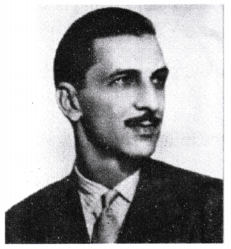
(i) Identify the personality shown in the above image.
______________________________________________
(ii) When did he receive the Bharat Ratna and for what?
______________________________________________
Activity Based Question
Question 1.
In the crossword given below, fill the empty blocks carefully with the help of clues.

ACROSS
1. Natural resources used in production, like soil and sunlight.
4. A person who starts a business and takes risks.
5. The process of gaining job-related knowledge or skills.
DOWN
2. An input used in production involving the effort of people.
3. Traditional shipbuilding technique used by Indians with cords.
6. The profit shared by companies with shareholders. .
Answer:
ACROSS
1. LAND
4. ENTREPRENEUR
5. TRAINING
DOWN
2. LABOUR
3. STITCHING
6. DIVEDENT